



Any expansion of the alleged peace agreement would lock the Middle East into endless apartheid, despotism, and militarism.
Donald Trump and Benjamin Netanyahu during an Abraham Accords signing ceremony event on the South Lawn of the White House on September 15, 2020.
(Yuri Gripas / Abaca / Bloomberg via Getty Images)
Donald Trump is caught in a trap of his own making. The US-Israeli war on Iran has gone so badly that even inveterate war hawks, like the neoconservative strategist Robert Kagan, admit that defeat is almost inevitable. Iran’s ability to choke off trade in the Strait of Hormuz has turned out to be a powerful weapon, one that has forced Trump to scale back his initial agenda of regime change. The current period of ceasefire and negotiations might more accurately be described as a holding action. In truth, the ceasefire is more nominal than real. On Monday, the United States resumed bombing Iranian naval bases and Israeli Prime Minister Benjamin Netanyahu threatened to intensify the ongoing bombing campaign in Lebanon directed against Iran’s ally Hezbollah. Netanyahu’s bellicose words are a reminder of one major hurdle to ending the war: Israel has no problem with scuttling negotiations by escalating hostilities.
The prospects for long-term peace thus seem dim, and even if a negotiated settlement could be reached, Trump would face the political problem of dealing with the powerful bipartisan coalition of Iran hawks in Washington. The “bomb Iran” caucus has been strengthened in the Republican Party with the primary defeat last week of Kentucky Representative Thomas Massie, a loud anti-war voice. Senators such as Ted Cruz and Lindsey Graham have been stridently warning that a peace deal with Iran would be a disaster. Prominent Democrats such as Debbie Wasserman-Schultz are equally vociferous in decrying any concessions to Iran as an abject failure.
To placate the Iran hawks, Trump is trying to expand one of his signature foreign policy initiatives, the Abraham Accords. Originally signed in 2020, the agreement normalized relations between Israel and five Muslim nations: Bahrain, Kazakhstan, Morocco, Sudan, and the United Arab Emirates. In a Truth Social post on Monday, Trump pushed for a “mandatory” expansion of the Abraham Accords to include Saudi Arabia, Qatar, Pakistan, Turkey, Egypt, and Jordan. Trump even suggested that Iran could eventually join the Abraham Accords.
With typical braggadocio, Trump argued that the expanded Abraham Accords, which would be sealed as part of a peace agreement with Iran, would “bring true Power, Strength, and Peace to the Middle East for the first time in 5,000 years. It will be a Document respected like no other that has ever been signed, anywhere in the World. Its level of Importance and Prestige will be unparalleled!”
Current Issue

Even making allowances for Trump’s typically hyperventilating rhetoric, this is a crackpot scheme. Egypt and Jordan have no need to sign the accords, for the simple reason that they have had diplomatic relations with Israel for decades. And the Saudi government—which previously evaded Joe Biden’s entreaties to do a deal with Israel—has repeatedly said it won’t sign the accords unless there is a resolution of the Palestinian question. If Saudi Arabia is adamant on this point, it’s hard to see how Iran would be any more pliant.
The renewed push for the Abraham Accords makes little sense except as an exercise in domestic politics. As The New York Times notes, “If more countries sign up to the accords, it could placate some Iran hawks who have criticized Mr. Trump for pursuing a peace deal.”
Even if expanding Abraham Accords is being proposed largely for show, this gambit illustrates why Trump is unlikely to achieve any lasting peace.
The Abraham Accords are immensely popular with the bipartisan foreign policy elite. Although launched under Trump, they were avidly co-opted by the Biden administration. In 2022, Joe Biden’s secretary of state, Anthony Blinken, said, “The Abraham Accords are making the lives of people across your countries more peaceful, more prosperous, more vibrant, more integrated.”
Both Trump and Blinken are selling a fantasy. Far from creating a lasting foundation for peace, the Abraham Accords have exacerbated conflicts in the Middle East. They are partially to blame for three of the major catastrophes in the region: the October 7 terrorist attack, Israel’s genocide in Gaza, and the current conflict with Iran.
As foreign policy analysts Matt Duss and Zuri Linetsky document in a recent article in Foreign Policy, the Abraham Accords were not about normalizing Israel within the region but rather creating an alliance between Israel and autocratic US allies. Israel had already had covert relations with Arab autocracies, but the Abraham Accords brought them into the open and formalized them into a military alliance based on opposition to Iran. The Abraham Accords were also designed to sideline Palestinian nationalism.
As Duss and Linetsky note, the Abraham Accords
undercut the pressure that Arab states were willing to apply to Israel over Palestinian issues; fed the illusion that the Palestinians could be sidelined and regional security assured by investing in friendly authoritarians; and helped Israel establish itself as a regional hegemon whose reckless warmaking now poses a threat to its own neighbors, to the broader interests of its U.S. patron, and to global prosperity.
The Abraham Accords were sold as a framework for delivering regional peace and stability. They have delivered the opposite. It should have been clear at the time that any “peace plan” premised on sales of arms and repressive technology to authoritarian regimes was bound to fail. The political conflicts that continue to bedevil the region will not be solved through force of arms, no matter what Washington’s ideologues say.
In Bahrain, popular opposition to the Abraham Accords and to the alliance with Israel has led to a ferocious crackdown on free speech. North South Notes, a new publication edited by author Vincent Bevins, has posted a report detailing the repression in Bahrain:
On April 27, the King issued an extraordinary decree to revoke the citizenship of 69 Bahrainis for “sympathizing with hostile Iranian acts,” without due process. On April 28, the criminal court gave 5 people life sentences for espionage, while dozens more were given 5 to 10 years in prison for uploading videos of attacks. Bahraini influencer Sayed Baqer Al-Kamel was given ten years for posting an Instagram Reel mourning the death of Supreme Leader Ali Khamene.
Popular
“swipe left below to view more authors”Swipe →
The repression in Bahrain is symptomatic of larger regional tendencies. There’s little love for Israel among the general population of most Middle Eastern countries. Conversely, the cause of Palestinian liberation retains sympathy. Given that reality, the Abraham Accords can only function through repression. The accords are not a peace deal, but a way of ensuring that the Middle East will be mired in apartheid, despotism, and war.
From illegal war on Iran to an inhumane fuel blockade of Cuba, from AI weapons to crypto corruption, this is a time of staggering chaos, cruelty, and violence.
Unlike other publications that parrot the views of authoritarians, billionaires, and corporations, The Nation publishes stories that hold the powerful to account and center the communities too often denied a voice in the national media—stories like the one you’ve just read.
Each day, our journalism cuts through lies and distortions, contextualizes the developments reshaping politics around the globe, and advances progressive ideas that oxygenate our movements and instigate change in the halls of power.
This independent journalism is only possible with the support of our readers. If you want to see more urgent coverage like this, please donate to The Nation today.
More from The Nation
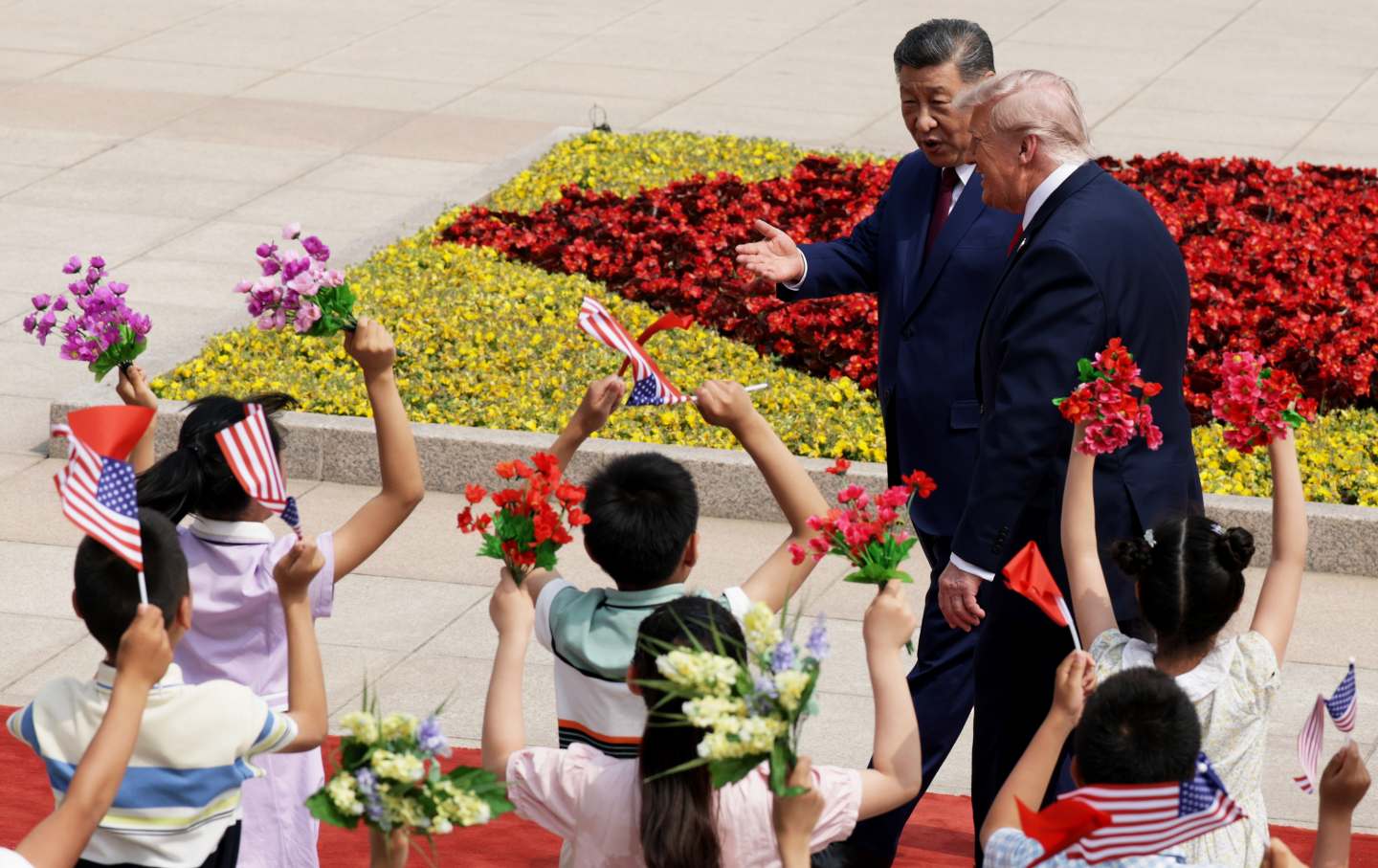
Hawkish rhetoric from the national security establishment isn’t grappling with the complex challenges posed by China’s rise.
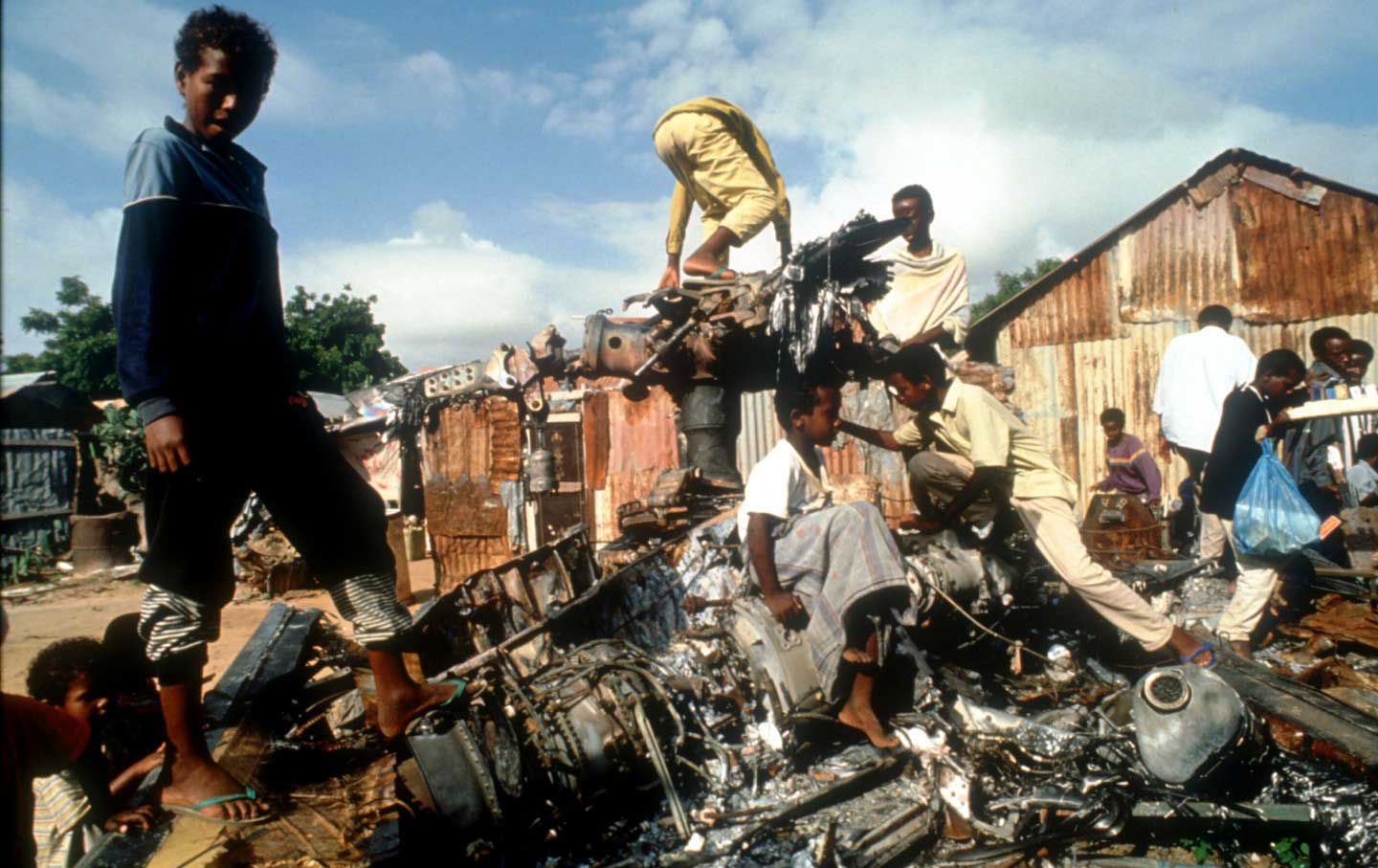
No American president has ever attacked Somalis with the persistence and at the rate of President Donald Trump.
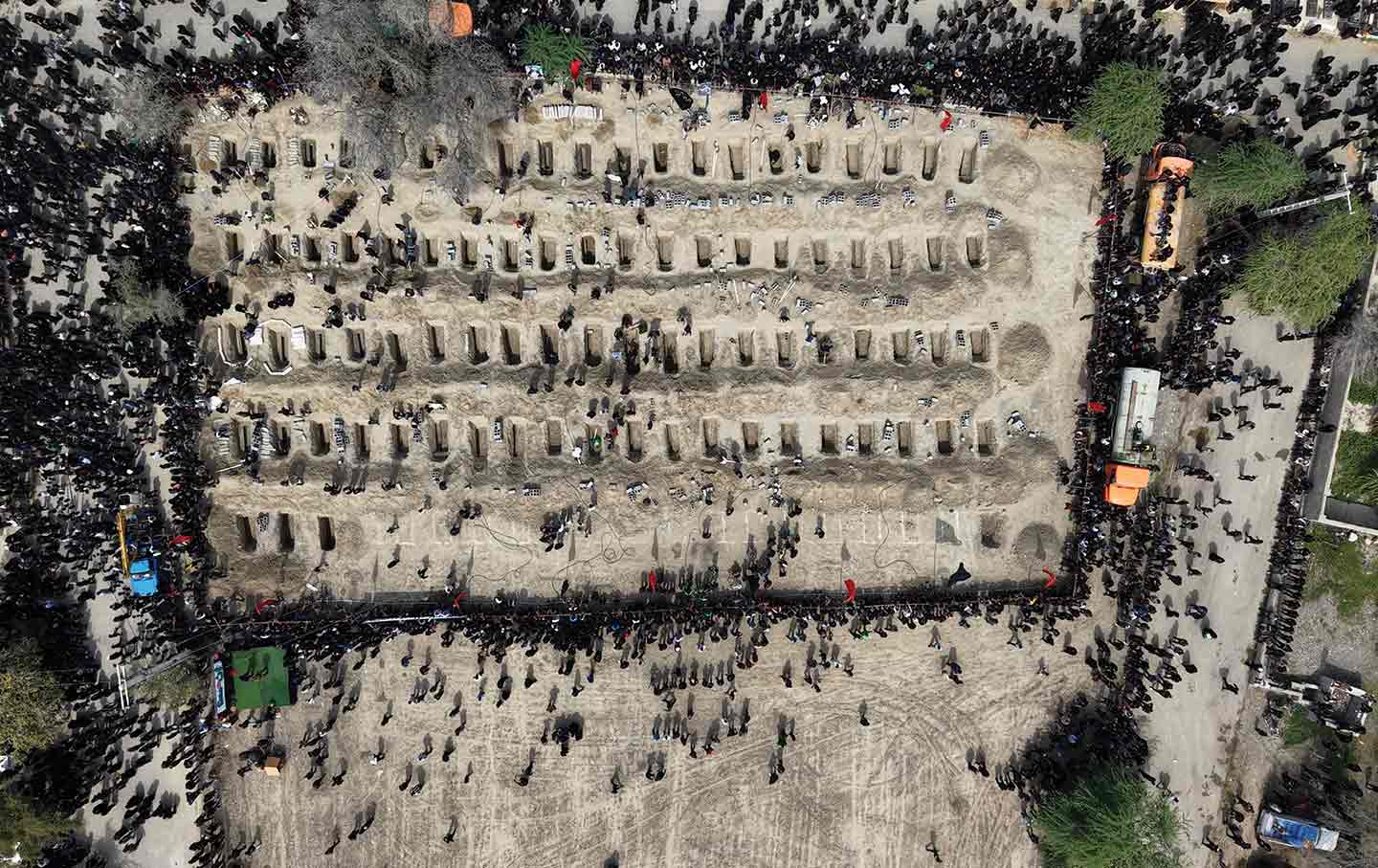
The story of how millions of Iranians fell for the regime-change fantasy.

Revealing the dangerous alliance of techno-fascists with finance capital and the military-industrial complex.
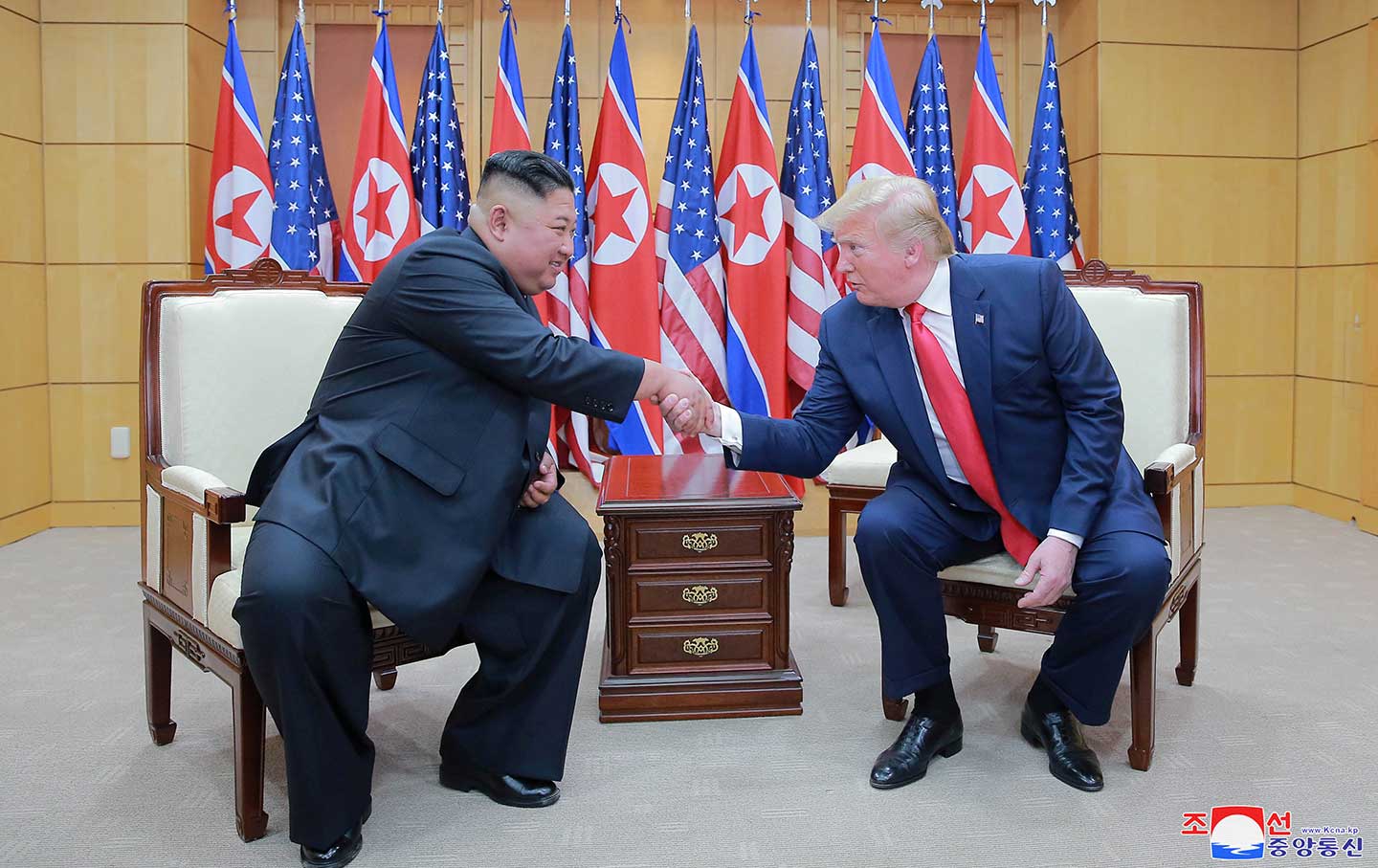
Trump and Kim have something in common: their desire for total control.

After decades of covert operations, the CIA director has given the Cubans an overt ultimatum for change on the island.