



April 1, 2026
The real estate gluttony of the superrich is truly eye-popping.
On Sunday, Bernie Sanders brought his tax-the-rich road show to the Bronx, attracting another large and enthusiastic crowd. But as the support for a wealth tax grows, so does the opposition. In California, a group of tech and business leaders have contributed nearly $80 million to a campaign to block a ballot initiative that would impose a one-time 5 percent levy on the net worth of residents with at least a billion dollars. In Washington State, the recent adoption of a 9.9 percent tax on millionaires has spurred predictions of an outmigration by tech executives, and on March 11 Starbucks founder Howard Schultz announced that, after more than four decades in Seattle, he and his wife were moving to Miami (though he didn’t mention the new tax). In New York City, executives have flocked to CNBC to issue apocalyptic warnings about a mass exodus of the megarich should Mayor Zohran Mamdani succeed in increasing the income-tax rate on city residents earning more than a million dollars, and the Partnership for New York City, a business advocacy group, has raised the specter of financial firms decamping for Florida and Texas.
In light of all this, it’s worth examining how the ultrarich actually spend their money, and how much of a crimp in their lifestyle such taxes might impose. Their most visible perks are private planes. The must-have model is the Gulfstream G700, which has seating for up to 19 passengers, 20 panoramic windows, a master bedroom with a shower, a range of 7,750 nautical miles, and a price tag of $80 million.
Then there are the yachts. They range in size from super (100 to 200 feet) to mega (200 to 300) to giga (above 300). Many feature swimming pools, Jacuzzis, saunas, gyms, movie theaters, and garages for jet skis and other playthings. Some have smaller support vessels that offer additional storage space and room for crew members. A more exclusive accessory is the private submarine. Hedge-fund billionaire Ray Dalio has not one but two submersibles and regularly invites scientists and journalists to go down with him to explore the ocean deep.
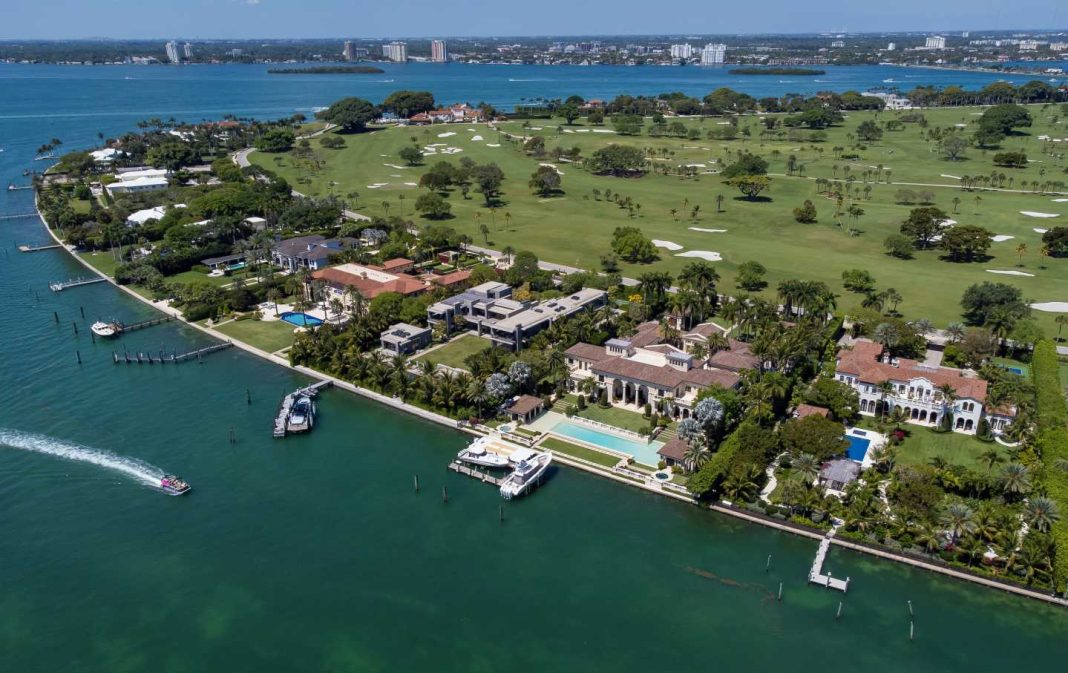
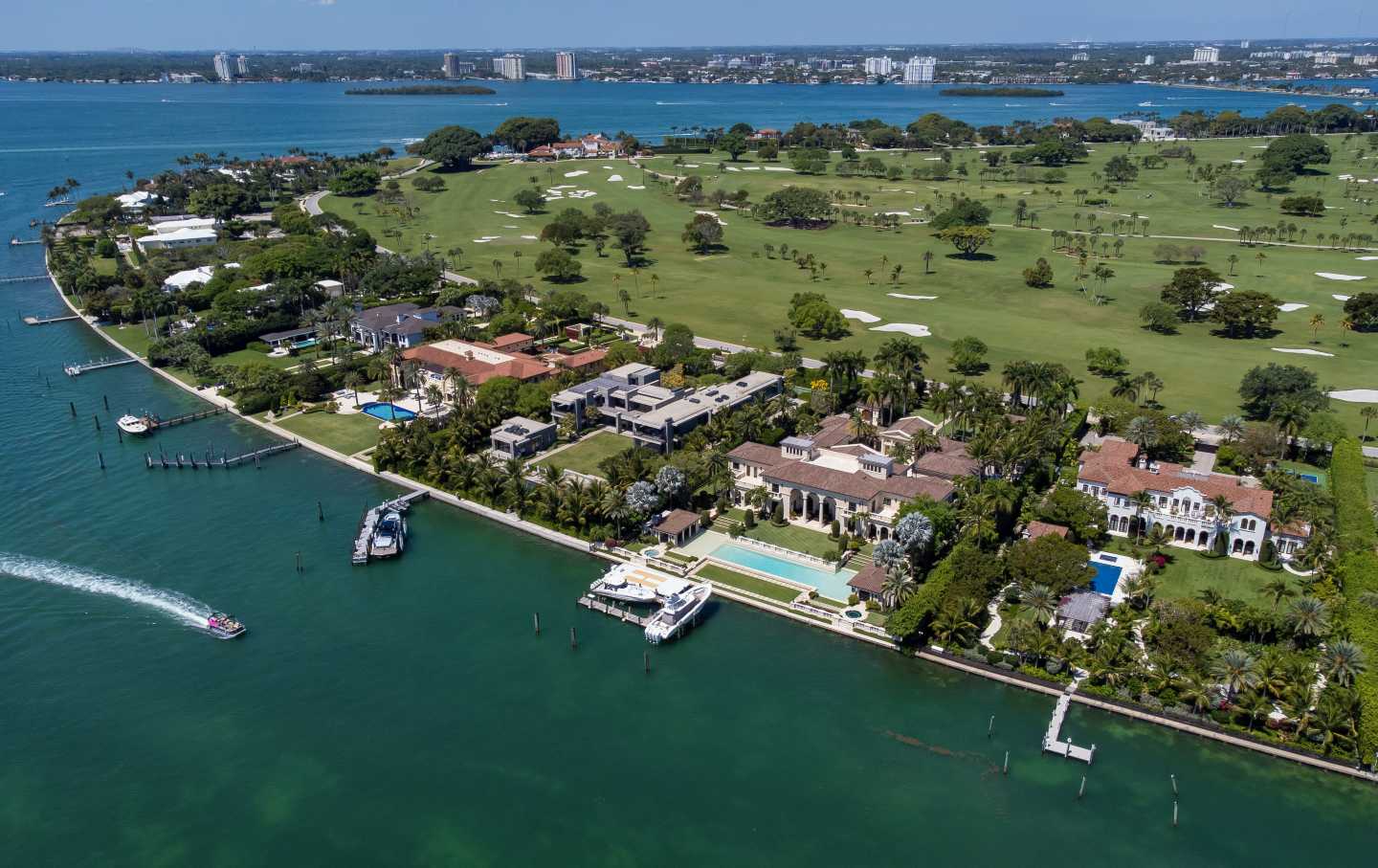
But there are only so many jets, yachts, and subs that one person can own. It is in real estate that the consumption of the superrich is most conspicuous. There used to be talk of the trophy wife; now it’s the trophy property—or properties. The ultrarich do their best to conceal their portfolios, often using obscurely named limited liability companies to conceal the transactions. They’re concerned about not only security but also appearances, for the level of gluttony on display is truly astounding. A look at the palaces of the patriciate drives home the staggering scale of their wealth—and the hollowness of their complaints about having to pay more tax on it.
Current Issue

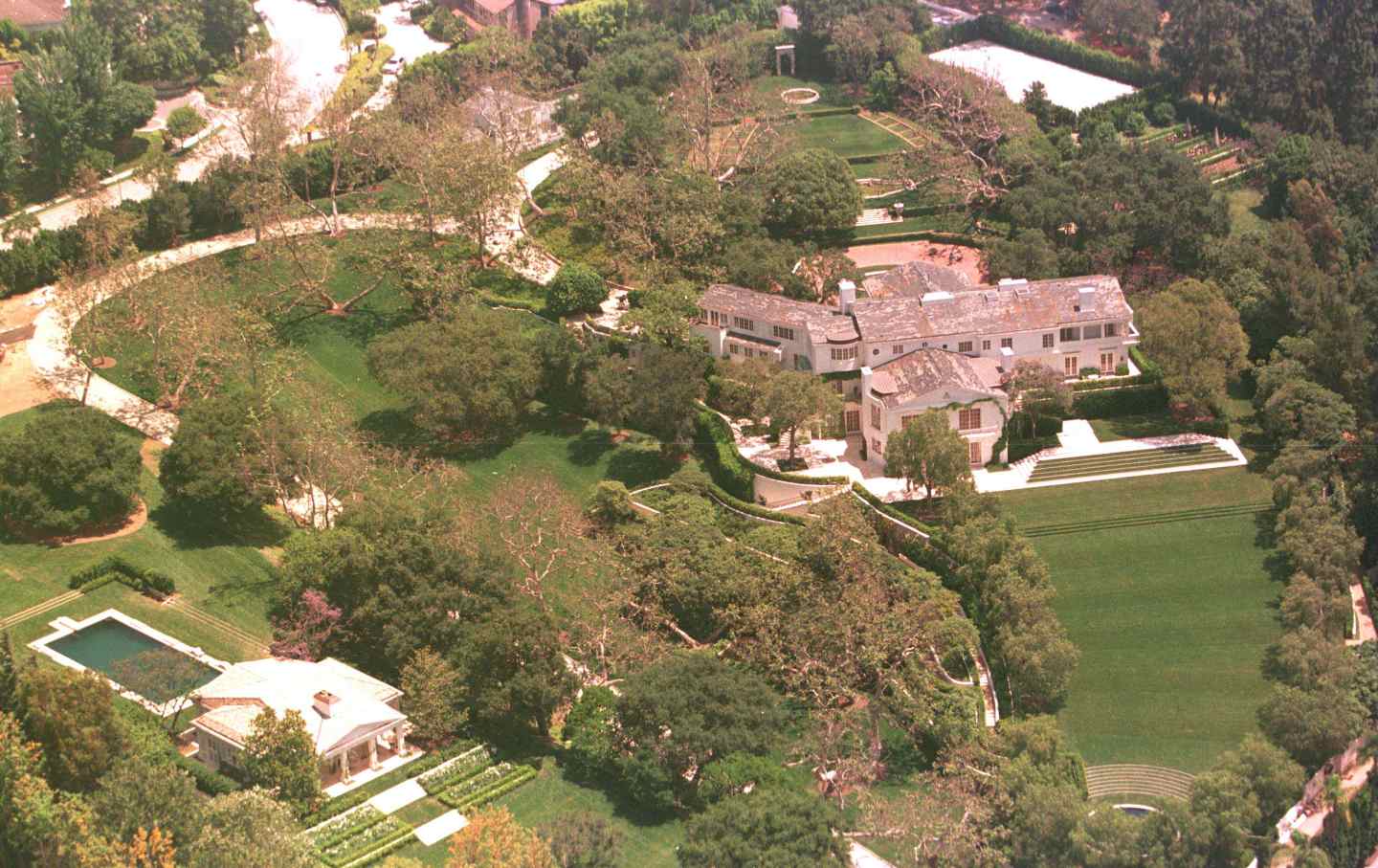
Take David Geffen. He’s venerated among the culturati for his generous philanthropy. He’s endowed the David Geffen Wing at the Museum of Modern Art, the David Geffen School of Drama at Yale, the David Geffen School of Medicine at UCLA, and David Geffen Hall at Lincoln Center. But Geffen has spent just as much on real estate. In 1990, he paid $47.5 million for the fabled 10-acre Beverly Hills estate of Hollywood tycoon Jack Warner, with its 13,000-square-foot Georgian-style mansion, 14 bedrooms, two dozen bathrooms, terraces, pool complex, and nine-hole golf course. Geffen then spent $45 million to remodel it, including $20 million on landscaping alone. During the renovation (which lasted eight years), he stayed at his oceanfront estate in Malibu, which once belonged to Doris Day and which sits on Carbon Beach, a mile-and-a-half long strip also known as Billionaires’ Beach. (Geffen sold it in 2017 to Mark Walter, the CEO of Guggenheim Partners and controlling owner of the Los Angeles Dodgers, for $85 million, which proved prescient, given that the place burned down during the Paradise fire.)
In 2020, Geffen sold the Warner estate to Jeff Bezos for $165 million, which was the most ever paid for a California home—until the following year, when venture capitalist Marc Andreessen and Laura Arrillaga-Andreessen paid $177 million for a seven-acre, 13-structure compound in Malibu’s Paradise Cove, also known as Billionaires’ Bluff. (In March 2022, the couple paid $44.5 million for another home on Malibu’s Escondido Beach, less than a mile away.) Geffen also owns a two-acre estate on star-studded Lily Pond Lane in East Hampton, for which he paid $70 million in 2016, and a multistory penthouse on Fifth Avenue overlooking Central Park. After buying the penthouse, Geffen embarked on a gut renovation that caused so much noise, vibration, and damage to adjoining apartments that aggrieved shareholders filed more than a dozen lawsuits and claims against him.
For a May 1993 profile in The New York Times Magazine, Bernard Weinraub, interviewing Geffen aboard his Gulfstream 4, asked whether all of his “extravagant homes” were really necessary. Geffen was indignant: “You say extravagant—well I’m a very wealthy man. I’ve earned all this money. I’ve worked for it. I didn’t cheat anybody… And I live relatively modestly given my level of success and wealth.”
Geffen’s modest lifestyle includes the Rising Sun, a $590 million, 454-foot yacht that features a basketball court and showpieces from his $2 billion art collection and on which he has hosted such celebrities as Julia Roberts, Paul McCartney, Tom Hanks, Oprah Winfrey, and Bradley Cooper. In March 2020, as the world was shutting down because of Covid, Geffen was on his boat in the Caribbean, from which he posted a series of stunning photos on Instagram. “Sunset last night…isolated in the Grenadines avoiding the virus. I’m hoping everybody is staying safe.” The response was so virulent that Geffen took his account private.
Bezos, in buying the Warner estate from him, undertook his own extensive makeover, which included the construction of a shimmering silver structure modeled on the nosecone of Apollo 11 (reportedly to house a sauna) and not one but three pickleball courts, to make sure that he would never have to wait for a game.
The Warner estate joined a Bezos portfolio that was already bloated. It included three adjacent properties on Indian Creek Island in Miami (costing $200 million); a 27,000-square-foot mansion in Washington, DC (the city’s largest home), for which he paid $23 million in cash in 2016 and which has a dozen or so bedrooms and twice as many bathrooms; a four-bedroom house across the street from that mansion; a 20,600-square-foot, four-bedroom house on a 5.3-acre compound on Lake Washington in Medina, outside Seattle; a 17,000-square-foot, 12-bedroom triplex penthouse in a building in Manhattan’s Flatiron district; four linked apartments in a landmark Art Deco condo on Central Park West; and Corn Ranch, a 400,000-acre expanse in the West Texas town of Van Horn, which also serves as a launch site for Blue Origin, his space-transport company.
Bezos, of course, is known for his extravagance. His 417-foot, three-deck yacht, the Koru, cost about $500 million to build; its 246-foot chase vehicle, the Abeona, has a helipad for use by his wife, Lauren Sánchez, a helicopter pilot. Their wedding in Venice cost as much as $50 million, lasted three days, featured entertainment by Usher and DJ Cassidy, and had a guest list topped by Tom Brady, Oprah Winfrey, Leonardo DiCaprio, and Bill Gates.
One would expect Gates—the crusader against polio, the cofounder of the Giving Pledge, the Cassandra about climate change—to be immune to such grandiosity. “Bill Gates Isn’t Like Those Other Tech Billionaires,” declared a New York Times headline on a story last year about his new memoir, stressing his modest tastes and public service. In fact, when it comes to real estate, Gates is exactly like those other billionaires. His main home, located in Medina, Washington (down the road from Bezos’s estate), may well be the most opulent dwelling in the country. Covering a staggering 66,000 square feet, it has seven bedrooms, 24 bathrooms, a 60-foot swimming pool with an underwater sound system, a 2,500-square-foot gym, six kitchens, a 1,000-square-foot dining room that can seat more than one hundred, a private library that includes Leonardo da Vinci’s Codex Leicester (for which Gates paid more than $30 million), and a hillside garage where Gates keeps his collection of luxury Porsches and Mercedes. The property also has an artificial stream stocked with salmon and trout and a beach on Lake Washington that is landscaped with sand reportedly shipped from Hawaii or the Caribbean. The estate is known as Xanadu 2.0, after the fever-dream palace in Citizen Kane.
Popular
“swipe left below to view more authors”Swipe →
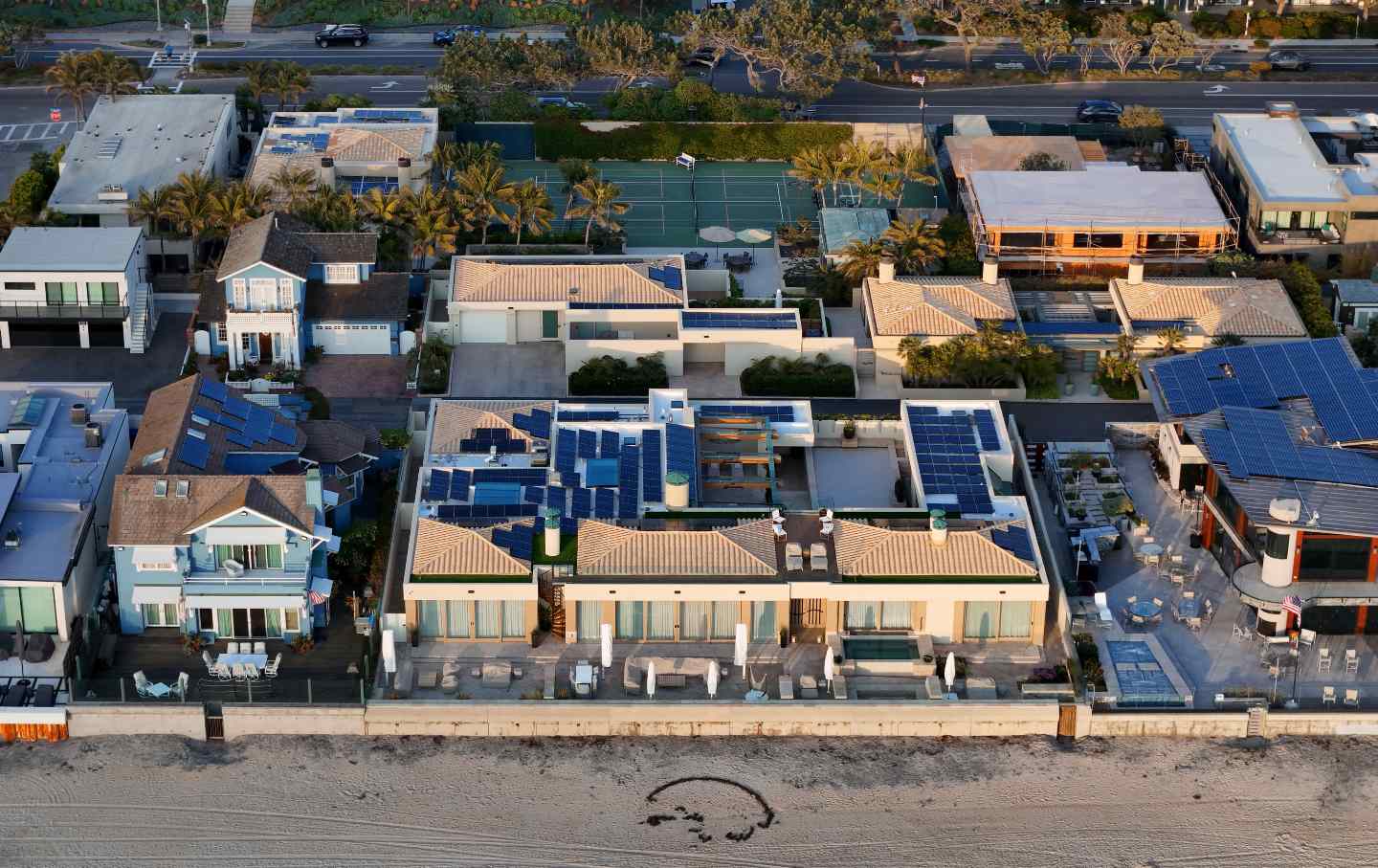
When it gets cold in Medina, Gates can repair to his home in Indian Wells, California, outside Palm Springs, which he bought in 1999 for $12.5 million and which covers 13,573 square feet, has six bedrooms and nine bathrooms, and borders a golf course operated by the exclusive Vintage Club, of which he is a member. Gates can also travel to his 7,234-square-foot home in Wellington, Florida, which has four bedrooms, six bathrooms, and a 20-stall barn used to support the equestrian activities of his show-jumping daughter Jennifer. To further accommodate her, Gates in 2014 paid $18 million for a 228-acre thoroughbred training center in Rancho Santa Fe, near San Diego. Six years later, he paid $43 million for an estate in Del Mar (less than five miles away), which has six bedrooms, a 10-person Jacuzzi overlooking a fire pit, and a deck set on 120 feet of beach.
To shuttle between these estates, Gates has not one but two Gulfstream G650ERs, which can sleep 10 people and which burn up to 500 gallons of fuel an hour. He also has two helicopters serviced by a floating heliport moored near Seattle.
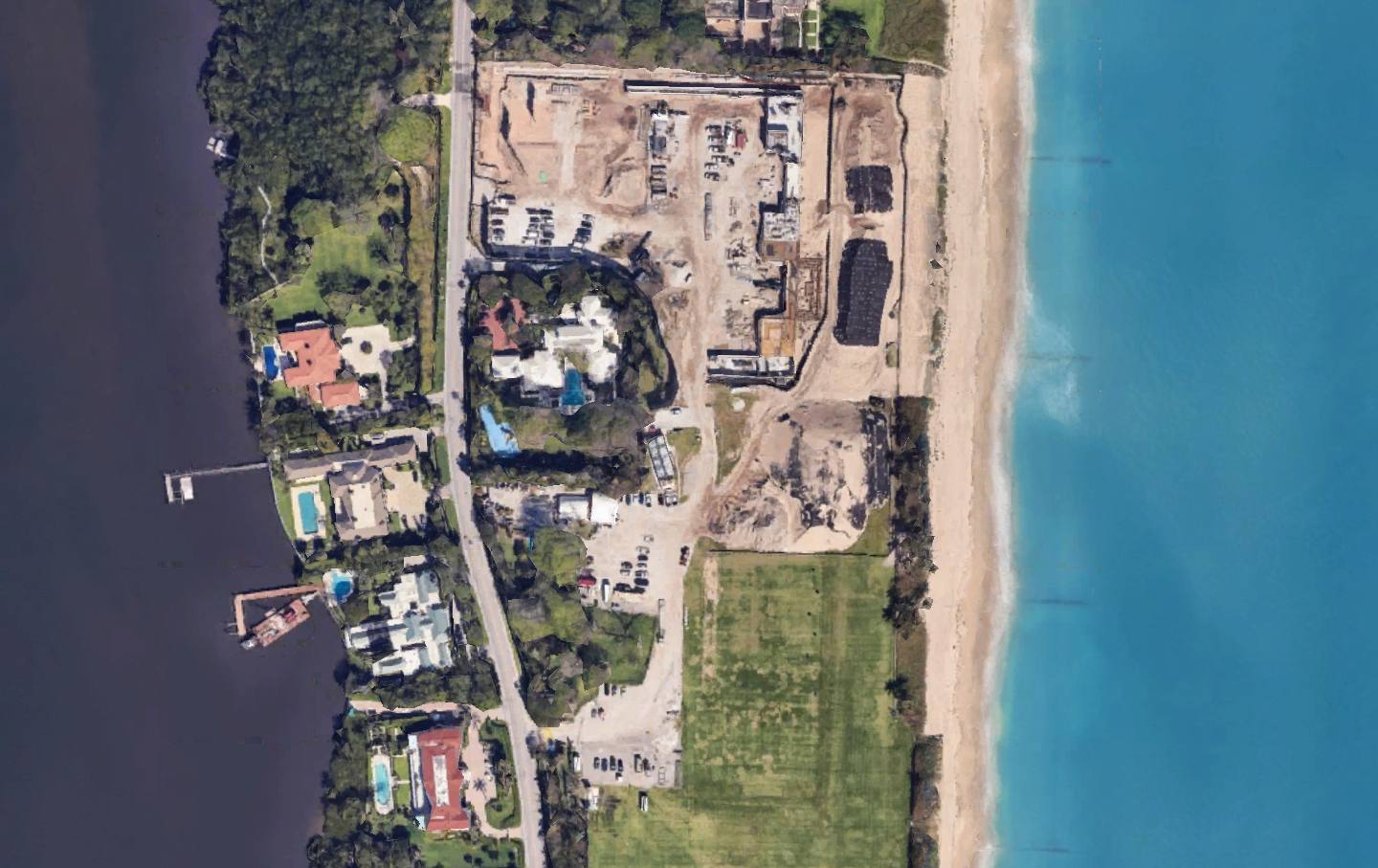
As compulsively acquisitive as Gates, Bezos, and Geffen are, they are all eclipsed by Kenneth Griffin. The founder and CEO of Citadel, the financial colossus, Griffin is worth about $50 billion, and he has used it to assemble a continent-spanning archipelago of properties. Among them:
- a four-level penthouse on N. Michigan Avenue in Chicago, for which he paid $58.75 million in 2017—the most ever for a residence in that city (units of which he has recently unloaded as part of his highly publicized relocation to Miami);
- an oceanfront property at the Four Seasons Hualalai resort on the Kona Coast of Hawaii;
- a pair of adjacent homes in Aspen, Colorado, with a combined total of a dozen bedrooms;
- a seven-acre oceanfront estate in Southampton that he bought from fashion designer Calvin Klein, for which he paid $84.4 million and which sits on Meadow Lane (aka Billionaires’ Lane), where his neighbors include Henry and Marie-Josée Kravis, Robert Kraft, and Leon Black;
- a Georgian-style mansion near Buckingham Palace in London, for which he paid $122 million;
- a quadruplex penthouse at 220 Central Park South in New York, for which he paid $238 million in 2019—still the largest sum paid for a residence in the United States;
- and a collection of lots extending over more than 25 acres on Palm Beach’s Billionaires’ Row, for which Griffin paid $350 million and on which he is building a 50,000-square-foot estate (including a clay tennis court for his mother) and which when completed is expected to be the most expensive home on the planet.
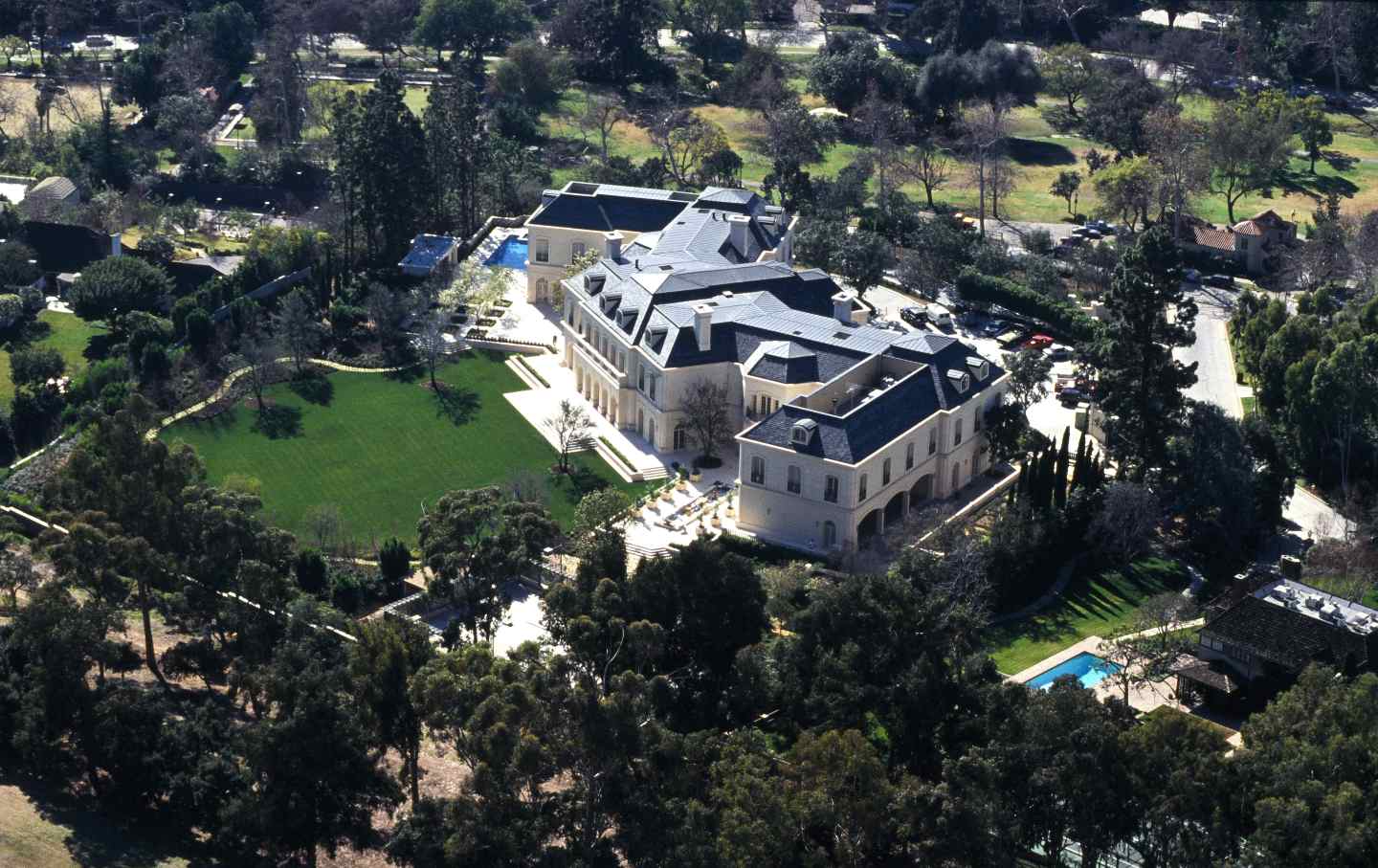
One could go on, cataloguing the properties of Eric Schmidt (more than a dozen, stretching from Montecito and Yellowstone to Miami Beach and London); Larry Ellison (the owner of 87,000 acres on the Hawaiian island of Lanai, constituting 98 percent of its area); Laurene Powell Jobs (the owner of at least seven high-end properties, including a sprawling beachfront compound in Paradise Cove in Malibu, purchased through four LLC transactions totaling $172 million, as well as a mansion in San Francisco that cost $70 million, a record for that city); and Sergey Brin, who last July paid $42 million for an eight-bedroom house on a five-acre cliffside property on Lake Tahoe in Nevada, which features two glass-enclosed funiculars that transport guests down the hill to a guest house.
That purchase has fueled speculation that Brin is abandoning California. He has donated $45 million to the block-the-billionaire-tax campaign in that state, and he has filed documents to move or terminate 15 California-based LLCs, including one linked to a superyacht and another to a private air terminal. In July 2025, however, the Google cofounder bought an 8,000-square-foot, six-bedroom Mediterranean-style villa in Malibu, for which he paid $49.75 million. It’s just a short walk from the 6,000-square-foot, six-bedroom estate that he bought in 2023 for $35 million. “He will likely use the smaller house as a guest house and move into the bigger one,” a source told the New York Post.
This voracity for luxury homes seems all the more egregious at a time when the United States faces an acute housing shortage (of 5.5 million units, according to the National Association of Realtors). “Blue-collar America struggles with housing crunch,” declared a recent headline in the Financial Times, which described how since the 2008 financial crisis “too few new homes have been built in the U.S., contributing to a surge in prices that has outstripped wages and left people struggling to find a place they can afford.” Currently, about 770,000 people in America are homeless, increasing numbers of whom have jobs, as Brian Goldstone documents in his recent book, There Is No Place for Us: Working and Homeless in America—the result of soaring rents, low wages, and a lack of tenants’ rights. In New York City, a record 154,000 children in the public schools experienced homelessness during the 2024–25 school year. Child care in the city costs an average of $20,000 per child, consuming about 20 percent of the median family budget. However many rich people might flee the city if their taxes increase, more than a half million residents have already left it since 2020, many of them driven out by the high cost of living.
The wealthy defend this state of affairs by claiming that they pay more taxes than everyone else. But that is not the case. According to a recent study published by the National Bureau of Economic Research, the effective tax rate of the top 0.0002 percent of the population (more or less the Forbes 400) averaged 24 percent from 2018 to 2020; compare with 30 percent for the full population and 45 percent for top labor income earners. ProPublica, analyzing leaked tax returns, found that from 2014 to 2018, the 25 richest Americans paid just $13.6 billion in taxes—an effective tax rate of 3.4 percent on $401 billion of income.
A one-time wealth tax such as the one proposed in California would actually have a negligible redistributive effect. It would not address the structural realities of an economy that has kept wages low in order to keep corporate earnings high and drive stock prices up, thereby swelling the portfolios of the very rich. (At his rallies, Bernie Sanders likes to point out that Elon Musk’s net worth exceeds the combined wealth of the bottom 53 percent of American households.) And that makes the protests of the superrich all the more unconvincing. It reveals an axiom of modern-day moguls: The more they have, the more they want. One can only wonder: Has their covetousness caused a breakdown in their value system, making them incapable of understanding their responsibility to their fellow citizens as part of the social contract?
More from The Nation
Letter to friends, students, colleagues, and collaborators.

Somehow, they’ve managed to top themselves in the crisis over TSA funding. Who knew that was even possible?

Under Trump, the US is unequivocally a force for evil in the world. It can seem morally intolerable to embrace happiness as our government massacres children.
The defense secretary is talking about Iran in bloodcurdling tones of religious extremism—and underscoring how much of a dangerous fanatic he is.

Huerta has stated that she is a survivor of abuse by César Chávez, amid broader claims by other women within the movement.