


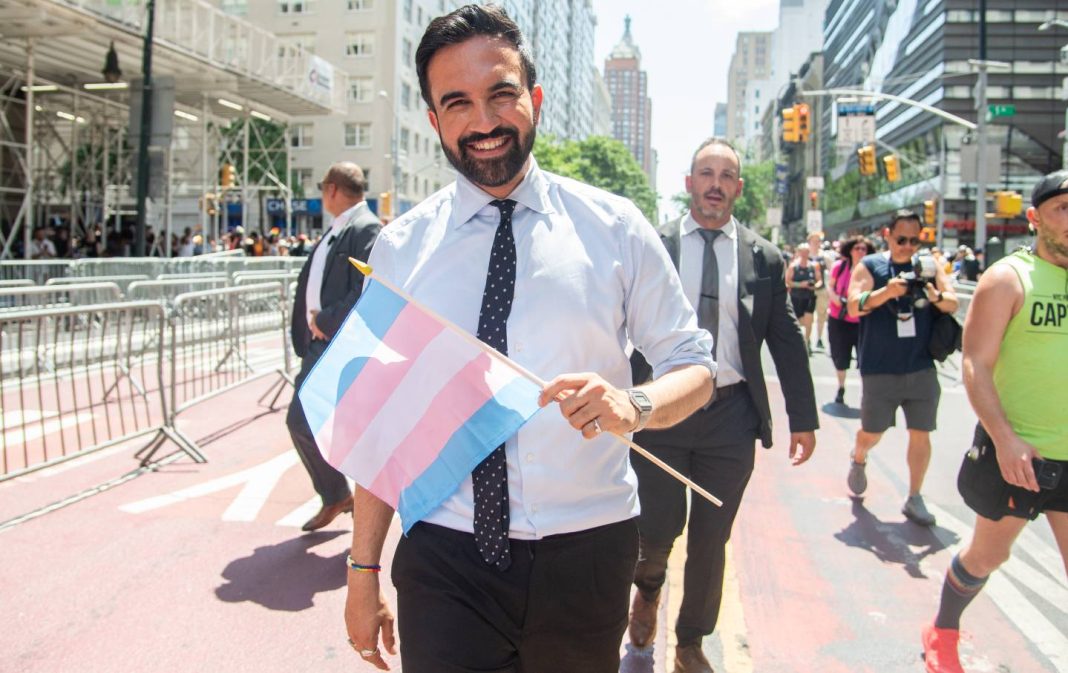

As a candidate, Zohran Mamdani made promises to New York City’s trans community. With two hospital systems ending trans youth care, he’s now facing his first test.
New York City mayoral candidate Zohran Mamdani attends the New York City Pride March on June 29, 2025, in New York City.
(Noam Galai / Getty Images)
In mid-February, NYU Langone Health shuttered its transgender youth clinic under pressure from the Trump administration. Young people who relied on the clinic for counseling, puberty blockers, and hormones found themselves without care. Families scrambled to find alternatives before their children’s medications ran out. Hospital leadership shrugged; the “current regulatory environment,” they told reporters, had forced their hand.
Two days later, another major private healthcare system, Mount Sinai Health System, reportedly did the same. Though the Trump administration has proposed rules that would strip Medicare and Medicaid funding from hospital systems providing gender-affirming care, those rules likely won’t become law for months. Nonetheless, the hospitals complied in advance—and parents of trans kids, speaking under pseudonyms for fear of harassment, told local reporters they weren’t sure where to go.
A parent of a trans teen told Gothamist, she felt that “New York is one of those places where we’ll be safe.” Now, though, she’s not so sure. “I don’t feel so safe right now.”
This is the first major test of the campaign promises that Mayor Zohran Mamdani made to transgender New Yorkers. He pledged to dedicate $65 million to trans care through New York’s public hospital system, establish an office of LGBTQ+ affairs, and legally fortify the city’s trans population against federal attacks. During his campaign, he even stood up to NYU Langone.
Current Issue

In March 2025, when NYU Langone Hospital first threatened to take medical care away from trans kids in preemptive compliance with a Trump directive, Mamdani showed up at a rainy rally with trans kids and their families. “We have seen NYU Langone comply with illegal executive orders out of a fear of their so-called biggest donors,” Mamdani said at the time. “Let us remind them that the city is also one of their biggest donors. Let us remind them that they do not pay a dollar in property tax, [and that] we are a city that is ready to use every single tool to assure compliance with city and state human rights laws.”
Langone backed down. Mamdani supporters had reason to believe that they were working to elect a staunch defender of trans rights.
Trans people were involved in Mamdani’s campaign from its earliest viral-video days to the inauguration: Ceyenne Doroshow, a veteran of New York’s Black trans activist movement, met with Mamdani long before he became a household name. Doroshow is the founder of G.L.I.T.S., an organization providing long-term housing to Black trans people in need—and in 2021, she purchased a 12-unit building in Queens to do just that.
Doroshow and Mamdani met in March 2024. “It wasn’t a dressed-up meeting. It was in-person, at a little coffee place. The lady in the restaurant didn’t even know who he was at all,” she recalled.
This was during Ramadan, Doroshow remembered. “So I sat in that restaurant and ate, he sat in that restaurant and starved.” The first question she asked him was how he’d describe a person like her to the world, if he had to.
“He asked, ‘How should I?’” Doroshow had asked that question many times before—on Capitol Hill, at City Hall—and rarely got a satisfying answer. This one, though, she could work with. “So here was somebody that was willing to ask, ‘How should I address the community?’ You come in and say, ‘Hello, family,’ because basically, we are your family as a city. You’re embracing all of us as a family.”
Doroshow has seen mayors come and go: Some policed Pride, threw around transphobic slurs, targeted transgender students’ bathroom access, and opposed transgender-rights legislation, while others—the better ones, she said—left the trans community more or less alone. With Mamdani, she felt she could finally hope for more: “We’re looking at humanizing our community in ways that have never been done by a politician. And this is what I wish and what I hope for.”
Doroshow and Mamdani spoke for hours: about sex workers’ issues, about housing for trans youth, about New York as a model of hope for trans kids in more repressive states like Florida, which is currently trying to criminalize even trans-affirming mental-health counseling — or Kansas, which has revoked drivers licenses from trans residents.
In a survey from December 2024, the Williams Institute at UCLA found that a quarter of trans respondents had already moved to a state more progressive on trans issues, while another quarter of respondents were considering doing so. New York will likely end up receiving many of those people. The city’s trans population is already one of the largest in the world—estimated at around 50,000 in 2018—and with more and more trans Americans migrating within the country to find safer places to live, that number is likely to grow.
“We’re in a city where our kids may be safe, but what about people that are not in this city?” Doroshow asked. “We set the precedent for change in other cities. Being the mayor of New York practically means you’re the mayor of the nation, and you move accordingly.”
In May, the Mamdani campaign held a trans community town hall at the Queens club Nowadays, where he revealed some of his policy platform for the trans community: He pledged to budget $65 million to “explicitly support and expand access to gender affirming care” for both youth and adults through New York’s public hospitals, build out protections against criminalization of gender-affirming care, and implement policies designed to support incarcerated people.
One of the people who wrote Mamdani’s LGBTQ+ platform is the therapist and social worker Nadia Swanson. Lena Pervez Afridi, a city planner, approached Swanson and asked them to carve out the Mamdani administration’s vision for queer and trans New Yorkers.
“We often are dreaming within a container,” Swanson said. In their six months of work on the platform, they said, “it was like no limits.” The city’s primary office of LGBT affairs, the Unity Project, was founded under Mayor Bill de Blasio, as a hallmark project of first lady Chirlane McCray. Under Mayor Eric Adams, Swanson said, that office’s staff shrank—and its budget and remit increased. “They had to do more with less,” Swanson said.
But under Mamdani, “this has the potential to be so much better,” Swanson thought. Though the trans and queer social safety net in New York is stronger than it is in many other cities, that safety net still has its weak points. And the bread-and-butter issues that plague New Yorkers are often uniquely painful for the city’s trans community, still largely excluded from formal employment and housing. Trans New Yorkers often end up crowdfunding surgery fees and late rent payments in a brutally expensive city, living from gray-market gig to gray-market gig, building up credit-card debt, and perpetually taking sublets, without the stable jobs or family money required to stay on a lease.
In Swanson and Afridi’s plan, much of which was whole-cloth adopted by the Mamdani campaign, funding for trans housing programs would increase substantially, as would workforce training and mental and physical healthcare infrastructure: all the things that are needed to build a dignified life.
Early signs for New York’s Mamdani era were positive. Trans people, for instance, were represented at Mamdani’s inauguration: Bernie Wagenblast, a trans woman voice actress best known as the voice that says “stand clear of the platform edge” on the New York City subway, was tapped to announce Mamdani to the world. “I’m sure they could have found a better announcer,” Wagenblast joked. “But the fact that they reached out to me to do that really said a lot.”
Whether they could have found a better announcer is dubious—Wagenblast, beyond voicing the subway announcements, has decades of experience as a radio reporter and voice actress—but the significance of the choice was clear. Mamdani was allying himself with a community that has been redefined nationally as an ideological threat to the United States.
Popular
“swipe left below to view more authors”Swipe →
Still, two months into Mamdani’s administration, many of his promises to the trans community have yet to become reality, and there are actions Mamdani could take now to fight back against the slow elimination of trans people from public life. According to the trans journalist Erin Reed, he could direct the city’s massive public hospital network to absorb NYU Langone’s trans youth patients. He could, as he did during his candidacy, threaten to make Langone pay its fair share of property taxes if it refuses to treat trans patients. He could pressure the New York City Commission on Human Rights to move forward with complaints it filed last year against Langone and Mount Sinai. He could add his voice to those of 73 New York state legislators, who have jointly condemned the end of Langone’s Youth Gender-Affirming Care program.
At the city level, other politicians have been more forceful, too. “Donald Trump and right-wing forces are manufacturing hysteria around innocent trans youth to advance a broader agenda of ripping away our healthcare,” said New York City Council members Chi Ossé and Justin Sanchez in a statement in February. “They are targeting youth care today, and if unchecked, adult care will be next. It is deeply disturbing that NYU Langone would so readily comply with that political pressure.” In other states, medical care for trans adults is already being restricted: Vanderbilt University Medical Center in Nashville, Tennessee, for instance, is no longer performing gender-affirming surgeries on patients of any age.
For Swanson, it’s not just about those trans people who already live in New York—it’s about those who are coming, fleeing anti-trans policies elsewhere. Though they worked with Mamdani in their personal capacity, Swanson works professionally with unhoused and runaway LGBTQ+ youth, and they said, “We’re seeing a large uptick” in young people arriving in New York from other states. Normally, about half the young LGBTQ+ people in New York shelters come from elsewhere, Swanson said. “That’s gone up by about 10 percent.” So, fortifying the safety net for trans people in New York means welcoming in a new wave of displaced people.
In Donald Trump’s State of the Union address, the president targeted trans youth: “We must ban it immediately,” he said, seemingly talking about any young person transitioning. In that climate, it’s no wonder trans people are moving toward the safest places available—and cities must find a way to welcome them, rather than caving to Trump’s demands.
“We need to meet the need of not just people who are already here,” Swanson said, “but the anticipation of all the people from other states and other countries that are coming and needing this lifesaving care, as well.”
More from The Nation
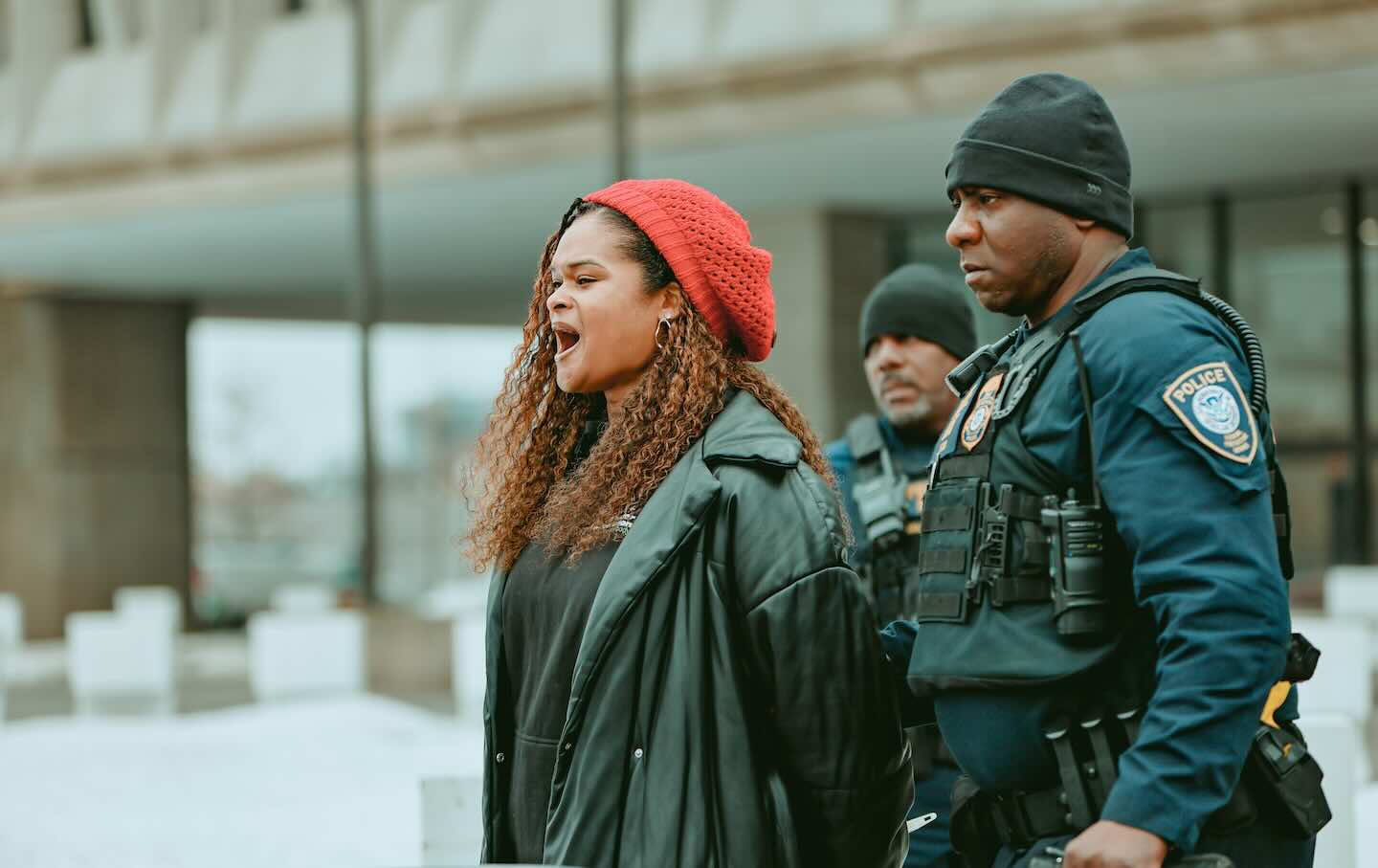
The Gender Liberation Movement’s Raquel Willis says trans youth “are our future” and that new HHS rules amount to a national ban on gender-affirming care for young people.
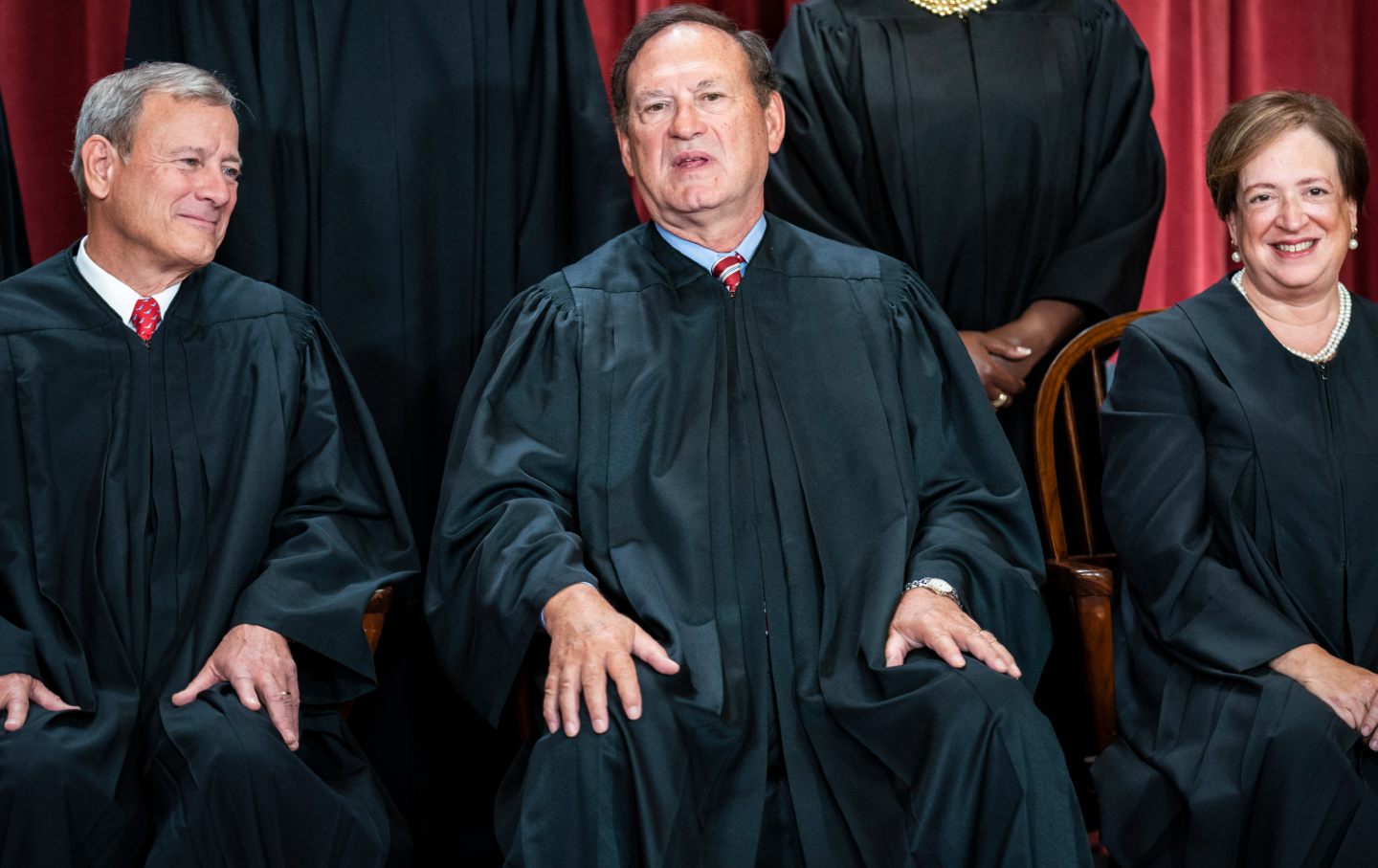
In this installment of Elie v. US, our justice correspondent explores the week’s big legal news, including a possible Alito retirement. Also, the anti-trans mob’s latest target: t…
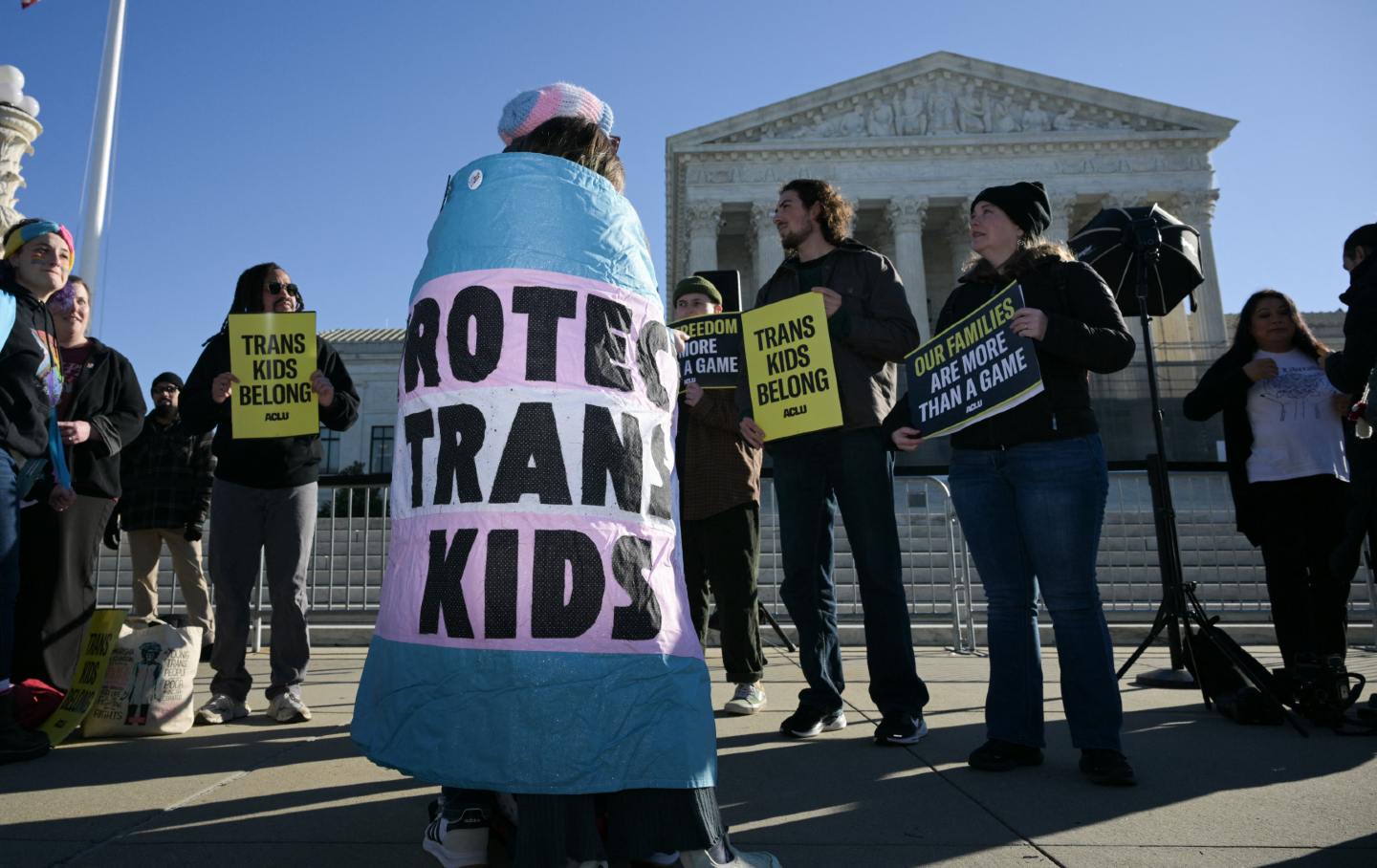
The court’s hearing on state bans on trans athletes in women’s sports was not a serious legal exercise. It was bigotry masquerading as law.
When a New Hampshire venue canceled a screening of my documentary, citing safety concerns, local volunteers built a theater overnight.
Decades after his death, Brandon’s name was invoked in the Nebraska legislature as a reminder of what led to his murder. This Transgender Day of Remembrance, we must not forget.