


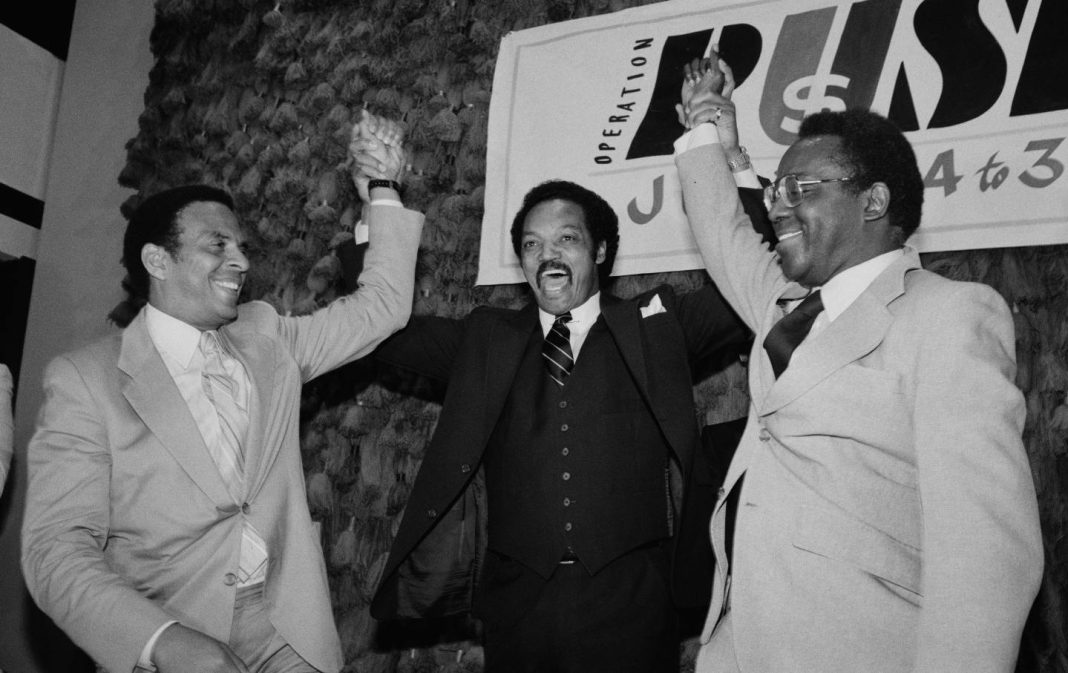

The candidate may have started as a long-shot contender, but The Nation always took him—and his impact on political history—seriously.
Jesse Jackson, 1983.
(Owen Franken / Corbis via Getty Images)
In the spring of 1983, as the Democratic Party searched for a path out of the Reaganite darkness, Jesse Jackson was a long-shot contender for the party’s presidential nomination—at least in the eyes of much of the political class. But in June of that year, The Nation treated his “embryonic campaign” as more than a far-fetched curiosity. Jackson’s bid for the nomination, the editors wrote, had already come to “symbolize a new dimension of black electoral power,” one that “threatens to reshape the Democratic Party as it stumbles toward the end of the century.”
From the start, the magazine treated Jackson’s campaign as a development with significant implications for the future of the party and the country. It stood to have a “disruptive effect” on the Democratic status quo. After years of unconvincing and morally indefensible feints to the right, it was about time: For decades, liberals had relied on Black voters and other minorities as a dependable base—“safe and stable,” in The Nation’s phrasing—then relegating them to the margins once campaigns were won. In what Jackson called the emerging Rainbow Coalition, by contrast, the candidate sketched the outlines of something more ambitious and durable—a coalition of “the poor of all races, the unemployed, women, Hispanics,” millions of Americans “floating around the edges of the mainstream.”
The excitement was real, but there were tensions within the Rainbow Coalition, and writers in The Nation’s pages debated them at length. In early 1984, after Jewish organizations accused Jackson of bigotry—charges tied both to offensive rhetorical missteps (calling New York “Hymietown”) and, perhaps more to the point, to his support for Palestinian rights—Philip Green mounted a defense of Jackson, arguing that some of the allegations blurred the line between antisemitism and legitimate criticism of Israeli policy. He noted that Jackson had apologized for his remarks. “One apology per error is exactly as many as is required,” Green argued. “Thus we must join him in protesting what he calls the ‘hounding’ of the media pack. It’s worth remembering that there’s only one candidate in the Democratic race who identifies Jews as a specific element of his constituency in almost every campaign speech he makes. That candidate is Jesse Jackson.”
In response, Paul Berman published a long rejoinder—titled “Jackson and the Left: The Other Side of the Rainbow”—contending that Jackson’s “problematic rhetoric” and associations could not be so easily dismissed. “The more support Jackson receives, the stronger he emerges from the election,” Berman predicted, “the more difficulties and nastiness there may be for progressive politics in the future.”
Current Issue

Jackson’s campaign forced a debate not only within the Democratic Party but also within the left itself—over solidarity and accountability, the boundaries of legitimate criticism of Israel and the persistence of antisemitism.
By the summer of 1984, as Jackson’s first presidential run faltered, the tone in this magazine hardened and postmortem recriminations began to appear. In July, an essay by Andrew Kopkind and Alexander Cockburn titled “The Left, the Democrats and the Future” indicted white progressives for what it saw as a failure of nerve. “Long before Louis Farrakhan slouched into the headlines,” the authors wrote, “white leftists had run through every excuse to withhold support from the black candidate.” One objection followed another: Jackson was too radical, too inexperienced, too divisive. The “dark motif” of the 1984 campaign had “changed from Anybody But Reagan to Anybody But Jackson.” “Once again,” Kopkind and Cockburn concluded, “racism destroyed the promise of a populist, progressive, internationalist coalition within the Democratic Party.”
In the ensuing years, The Nation reported on the positive effects that had followed Jackson’s unsuccessful first campaign. In November 1987, Kopkind traced how Jackson’s 1983–84 registration drives had swelled Black turnout and strengthened Democrats in the midterms. The Rainbow Coalition, despite Jackson’s loss in the primary, had gone from being merely a slogan to a genuinely assertive progressive Democratic base. “Few politicians or political commentators who are not on the left margin of society take the Rainbow Coalition seriously as a potential force in national affairs—even if they are awed by and a little frightened of Jackson’s personal popularity,” Kopkind observed. “How far the coalition campaign can go this time is still everybody’s guess and nobody’s sure thing.”
In 1988, pushed by Kopkind and others, the magazine moved from merely analyzing Jackson’s campaign to offering a full-throated endorsement, backing Jackson for the Democratic nomination:
The enormous energy that his campaign releases has created a new populist moment, overtaking the languid hours and dull days of convention politics and imagining possibilities for substantial change beyond the usual incremental transactions of the two-party system. It offers hope against cynicism, power against prejudice and solidarity against division. It is the specific antithesis to Reaganism and reaction, which, with the shameful acquiescence of the Democratic center, have held America in their thrall for most of this decade and which must now be defeated.
Jackson’s platform—economic justice, anti-apartheid solidarity, nuclear disarmament, Palestinian rights—aligned with many of The Nation’s long-standing commitments. His campaign embodied the radically hopeful idea, advocated by this magazine with varying degrees of confidence and credibility ever since the 1920s, that the Democratic Party could be remade as a vehicle for justice and equality by those long consigned to its periphery.
That idea remains alive today, and more vitally necessary than ever, even if the man himself has passed on. Jackson’s presidential campaigns represented the stirring of a dormant movement, the possibility of a class-inflected, multiracial coalition, one teased again in Barack Obama’s 2008 campaign before being unceremoniously thrust aside. Still, the energy of Jackson’s “embryonic campaign” never entirely dissipated. It has resurfaced in intra-left debates over coalition politics, electoral strategy, Middle East policy, and the meaning of populism, debates that continue vigorously today (often in The Nation). Wherever the next progressive disruption comes from, it will have its roots in Jackson’s campaigns.
More from The Nation
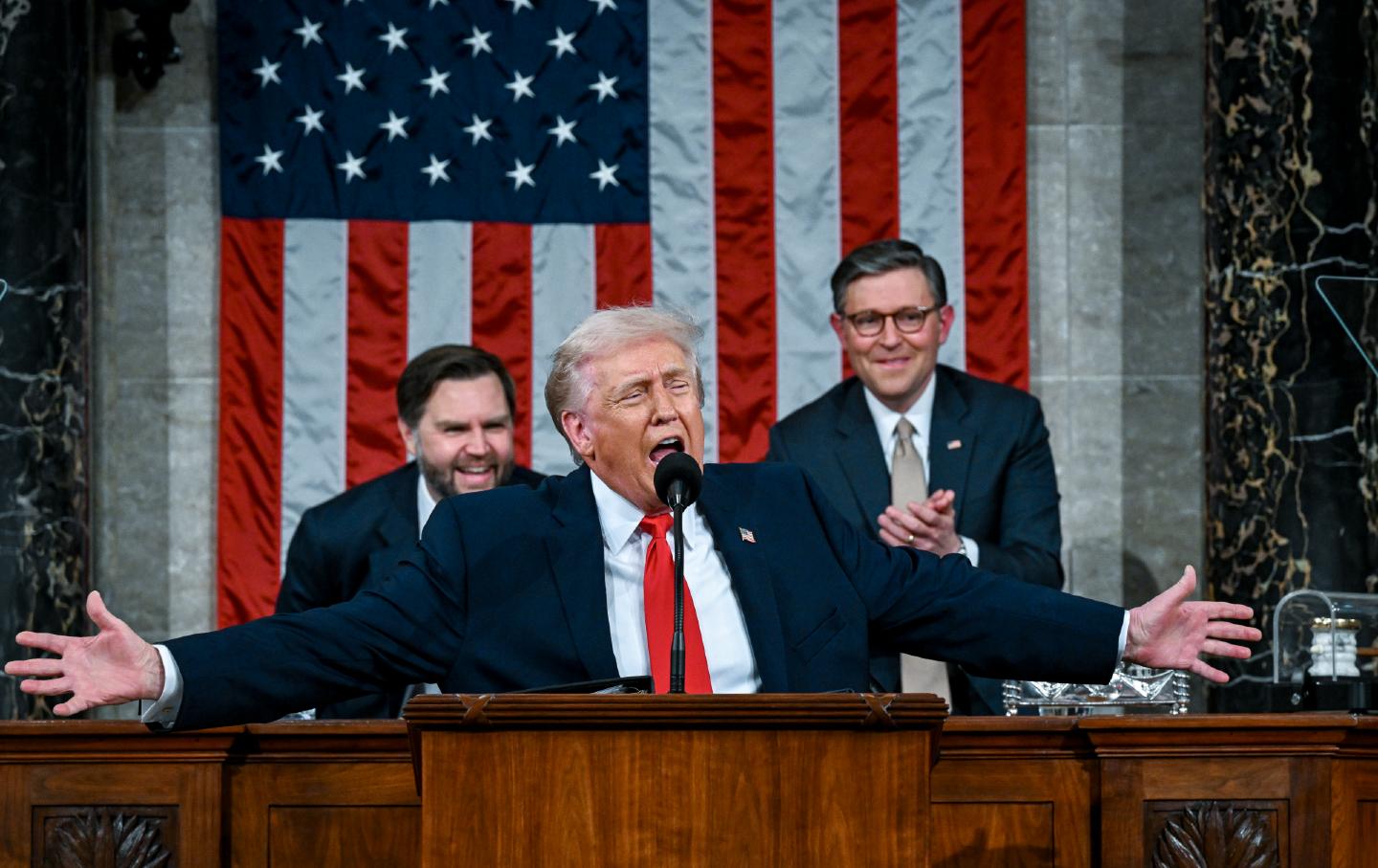
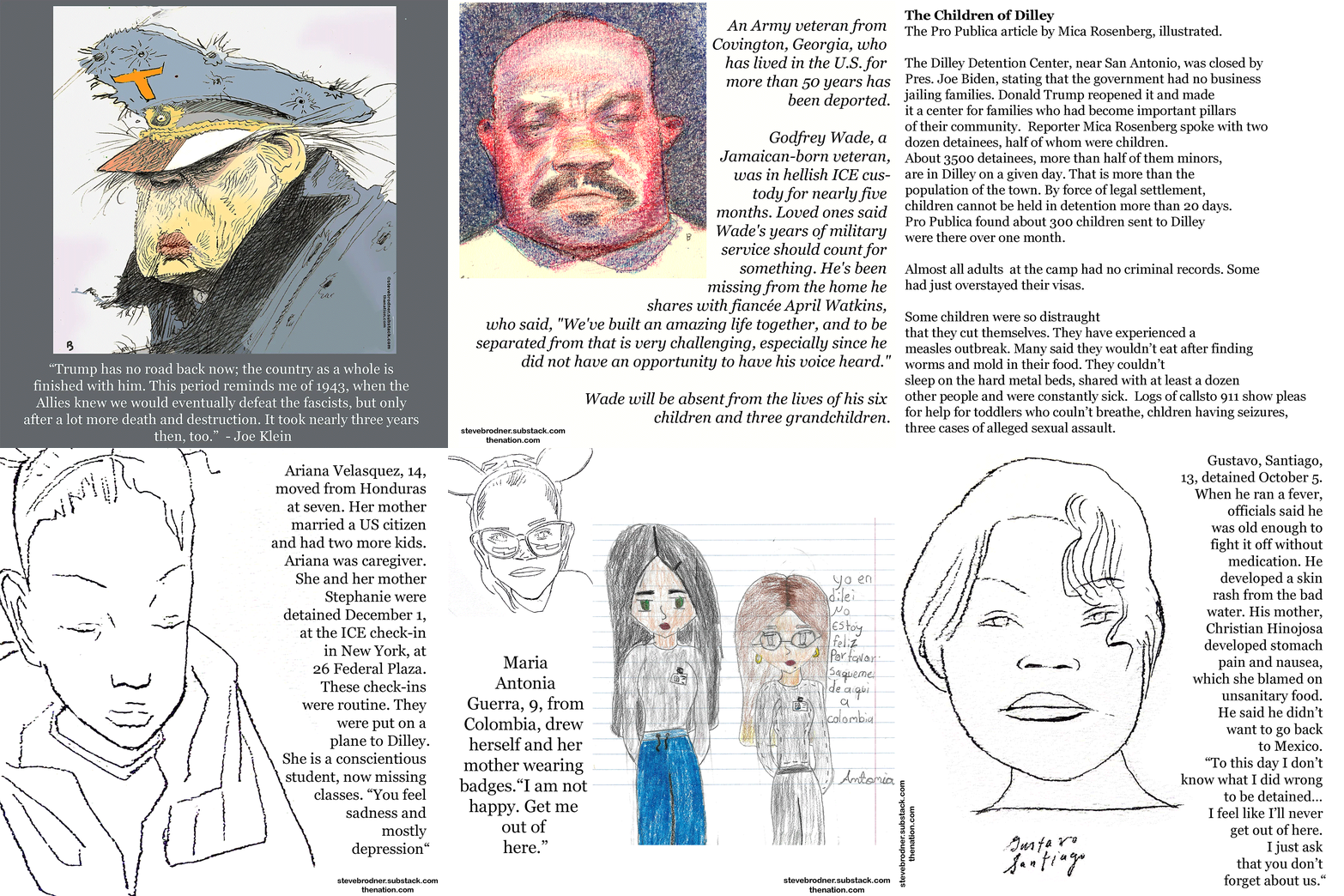
In this week’s Elie v. US, our justice correspondent explores how Trump’s State of the Union turned authoritarian violence into a titillating event. Plus Kansas’s vile ban on driv…
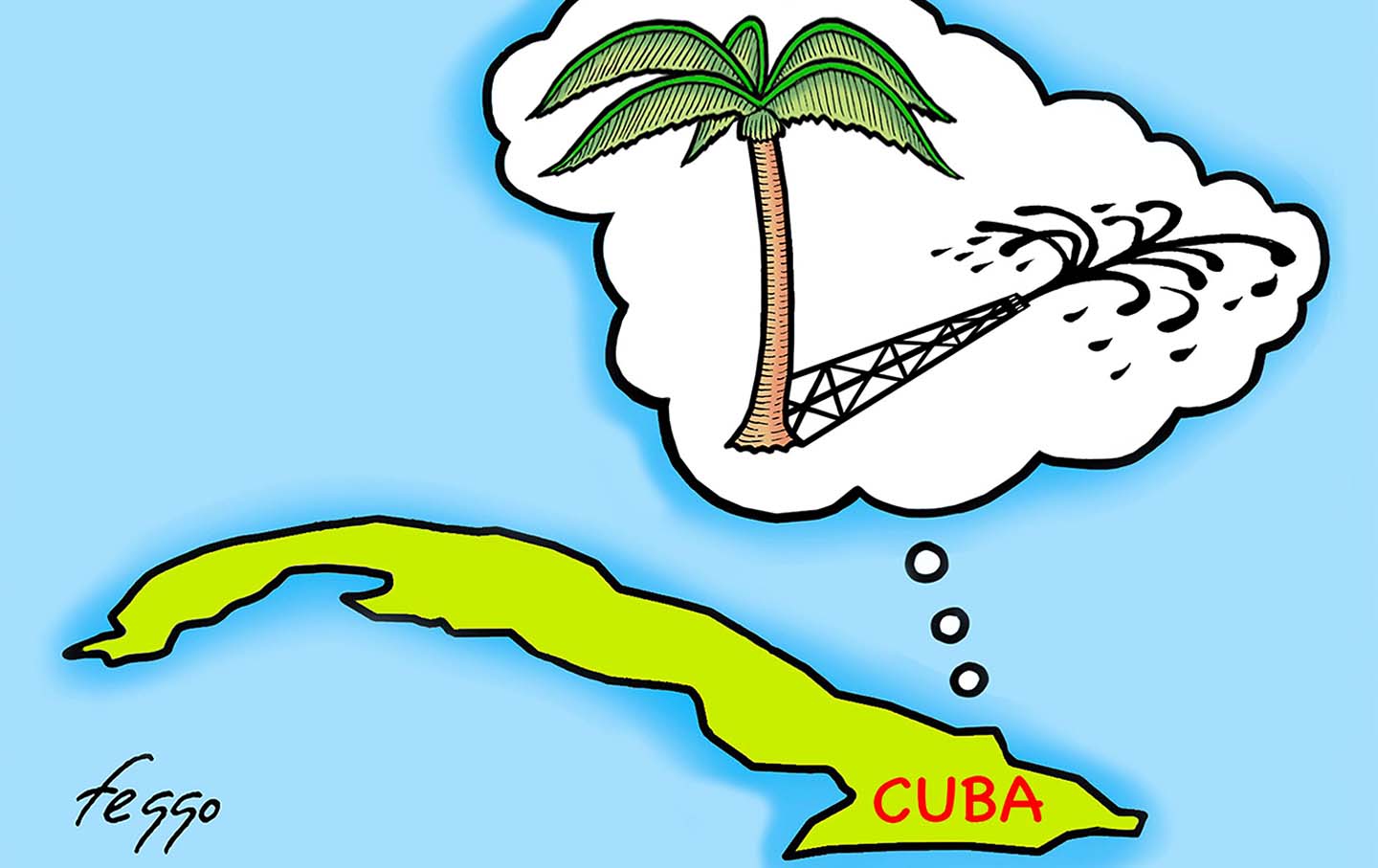
Much of Cuba goes dark as a US oil blockade chokes the island’s energy supply. Major carriers have halted services now that aviation fuel is no longer available at nine internation…

It was most mendacious State of the Union in US history. It was also the longest.

In his majority ruling in a sleeper case about mail delivery, Thomas opened the door to a new way for Republicans to suppress the Black vote.